Ditch the Apps: Mastering the Art of Analog Bullet Journaling

The Digital Overload Paradox
Do you ever feel like you spend more time managing your productivity apps than actually getting things done? You open a task manager, spend ten minutes categorizing a sub-task, move a deadline to next week, and suddenly, two hours have vanished. You are not alone. In our attempt to optimize our lives with technology, we have created a digital treadmill that never stops. The notifications ping, the cloud syncs, and the overwhelming lists of color-coded chores start to feel like a prison rather than a path to freedom.
There is a quiet, tactile rebellion happening in cafes and home offices everywhere. People are trading their glowing screens for a simple notebook and a pen. This is not about being a luddite. It is about the cognitive science of writing things down. When you physically script your day, you force your brain to slow down, process, and prioritize. This is the art of the Bullet Journal, and it is the most effective way to turn your internal chaos into a high-performance roadmap.
What Exactly Is a Bullet Journal?
At its core, a Bullet Journal is an analog system designed to track the past, organize the present, and plan for the future. Unlike a rigid store-bought planner that dictates how you should organize your day, a Bullet Journal is a blank canvas. It is a system of rapid logging that uses symbols to differentiate between tasks, events, and notes. It is modular, meaning it adapts to your life, not the other way around.
Think of it as a brain dump that actually works. Instead of keeping a mental tally of everything you need to do, you offload that cognitive burden onto paper. By clearing your mental RAM, you free up space for deep work and creative problem-solving.
The Anatomy of Your New System
To get started, you do not need expensive fountain pens or a leather-bound journal. A simple notebook and a standard ballpoint pen are enough to begin. The system relies on four primary components:
- The Index: Reserve the first few pages of your notebook. As you fill your pages, number them. The Index allows you to flip back and find exactly where you stashed that brainstorm from three weeks ago.
- The Future Log: This is your bird's-eye view. Divide a few pages into sections for the coming months. This is where you record birthdays, long-term deadlines, and events that are not happening this week.
- The Monthly Log: This gives you a snapshot of the current month. Use one page for a calendar view and the opposite page for a list of tasks you hope to accomplish before the month ends.
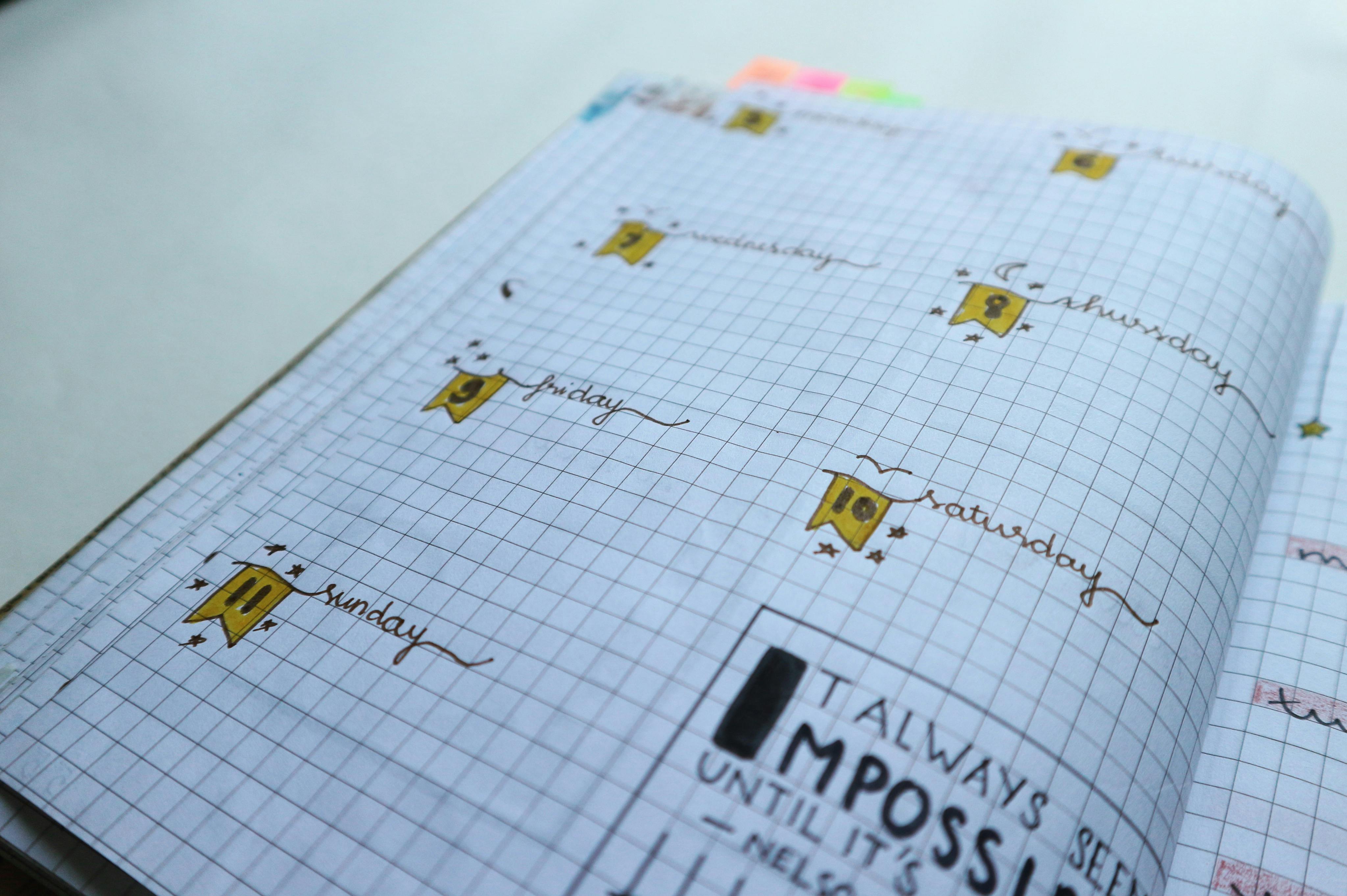
- The Daily Log: This is where the magic happens. Every morning, or the night before, you write down the date and start logging. Use a bullet point for tasks, a circle for events, and a dash for notes. When a task is done, cross it out. If it is not done, move it to the next day or decide it is not worth doing at all.
The Power of Migration
The most important part of this process is what the creator of the method, Ryder Carroll, calls migration. At the end of every month, you look at your unfinished tasks. You have to ask yourself: Is this still worth my time? If the answer is yes, you move it to the next month. If the answer is no, you cross it out and forget it. This simple act of manual transfer acts as a filter. It stops you from blindly carrying over tasks that no longer serve your goals. It forces you to be intentional about your labor.
A Real-World Example
Consider the case of Sarah, a freelance graphic designer who felt buried by client emails and administrative bloat. She started using a notebook to track her daily progress. Instead of letting her to-do list grow infinitely in a digital app, she began limiting her daily task list to just three non-negotiables. By the end of the week, she noticed she was finishing her projects faster because she wasn't distracted by the clutter of 'nice to have' tasks. The physical act of closing her notebook at 5:00 PM gave her a sense of completion that she never felt when closing a browser tab. She stopped working in the evenings because her notebook clearly showed her that she had done enough for the day.
How to Start Today
Do not wait for the perfect notebook to arrive in the mail. Grab whatever you have sitting on your desk. The beauty of this system is its imperfection. You will make mistakes. You might skip a day or get messy. That is perfectly fine. The goal is not a pretty Pinterest spread; the goal is clarity.
Start by setting up your index and your current monthly log. Then, write down every single thing that is currently buzzing in your head. Do not organize it yet—just get it out of your brain and onto the paper. Once it is written down, you will immediately feel the pressure subside. You have externalized the chaos. Now, you can look at it objectively and decide what actually matters.
Final Takeaways
The art of analog planning is about reclaiming your attention. In a world that is constantly trying to hijack your focus with notifications and updates, your notebook is a sanctuary. By choosing to plan on paper, you are choosing to be deliberate about how you spend your time.
Remember these three rules for success: keep it simple, focus on migration to clear out the junk, and do not worry about making it look perfect. Your notebook is a tool, not a piece of art. When you stop worrying about how it looks and start focusing on how it helps you function, you will find that you can handle almost any amount of chaos with a calm, steady hand.