The Art of the 'Slow Desk': How to Curate a Sensory Workspace

The Desk That Breathes
We have all been there. It is 3:00 PM, the fluorescent lights are humming like a swarm of angry hornets, your lower back is screaming, and your screen feels like it is physically sucking the life out of your retinas. Most of our workspaces are designed for efficiency, not humanity. We treat our desks like refueling stations for productivity machines, but when we treat ourselves like machines, we burn out like broken lightbulbs. Enter the Slow Desk—a philosophy that trades the sterile, high-speed office aesthetic for a sensory environment that actually supports your nervous system instead of fraying it.
The Slow Desk is not about buying expensive ergonomic chairs or fancy tech gadgets. It is about intentionality. It is about turning your workspace into a sanctuary where your brain feels safe enough to enter a state of deep flow. By engaging your senses—touch, sight, and sound—you can transform a place of digital dread into a home base for creative clarity.
The Tactile Foundation: Texture Over Plastic
Think about the last time you felt truly relaxed. Was it while typing on a cheap, hollow plastic keyboard, or was it sitting in a room with wood, wool, or soft light? Our brains are wired to respond to textures. When everything on your desk is smooth, cold, and uniform, your brain stays in a state of alert, shallow processing. To shift into deep focus, you need to bring the physical world back into your workspace.
Start by upgrading the surfaces you touch most. Swap that cheap mouse pad for a felt or leather desk mat. The warmth of natural fibers provides a grounding tactile experience that helps you stay present. If you write by hand, use a fountain pen or a weighted rollerball instead of a plastic stick pen. The weight of an object in your hand signals to your brain that what you are doing is significant. It is a small change, but it breaks the monotony of the digital drag.
Curated Lighting: The End of Fluorescent Fatigue
Lighting is the most overlooked element of workspace design. Most offices are lit with overhead panels that cast flat, shadowless light, which is essentially an invitation for a tension headache. If you want to slow down and focus, you need to mimic the natural rhythms of the day. Your desk should be a place where light has character.
Ditch the overheads if you can. Instead, invest in a warm-toned desk lamp with a high color rendering index. Position it so it creates gentle shadows rather than washing out your workspace. If you work near a window, use a sheer curtain to diffuse the harsh glare of direct sunlight. The goal is to create a soft, golden glow that mimics the late afternoon sun. This signals to your brain that it is time to shift from frantic multitasking to steady, deliberate work.
Intentional Acoustics: Managing Your Sonic Landscape
Silence is often overrated. Total silence can actually make you more sensitive to the tiny, irritating sounds of the office, like a colleague tapping their foot or a distant printer. Instead of trying to eliminate sound, curate your acoustic environment. The Slow Desk uses sound to create a protective bubble.
Many people find that brown noise or ambient field recordings—think distant rain, a crackling fire, or the low hum of a library—are far more effective for concentration than typical pop music. The key is consistency. If you use headphones, choose an open-back pair that allows for a more natural soundstage, which reduces the feeling of being trapped in your own head. If you are in a private space, consider a small fountain or a white noise machine. By controlling your auditory input, you stop your brain from scanning for distractions, allowing it to pour all that energy into your actual work.
The Minimalist Ritual: Keeping It Slow
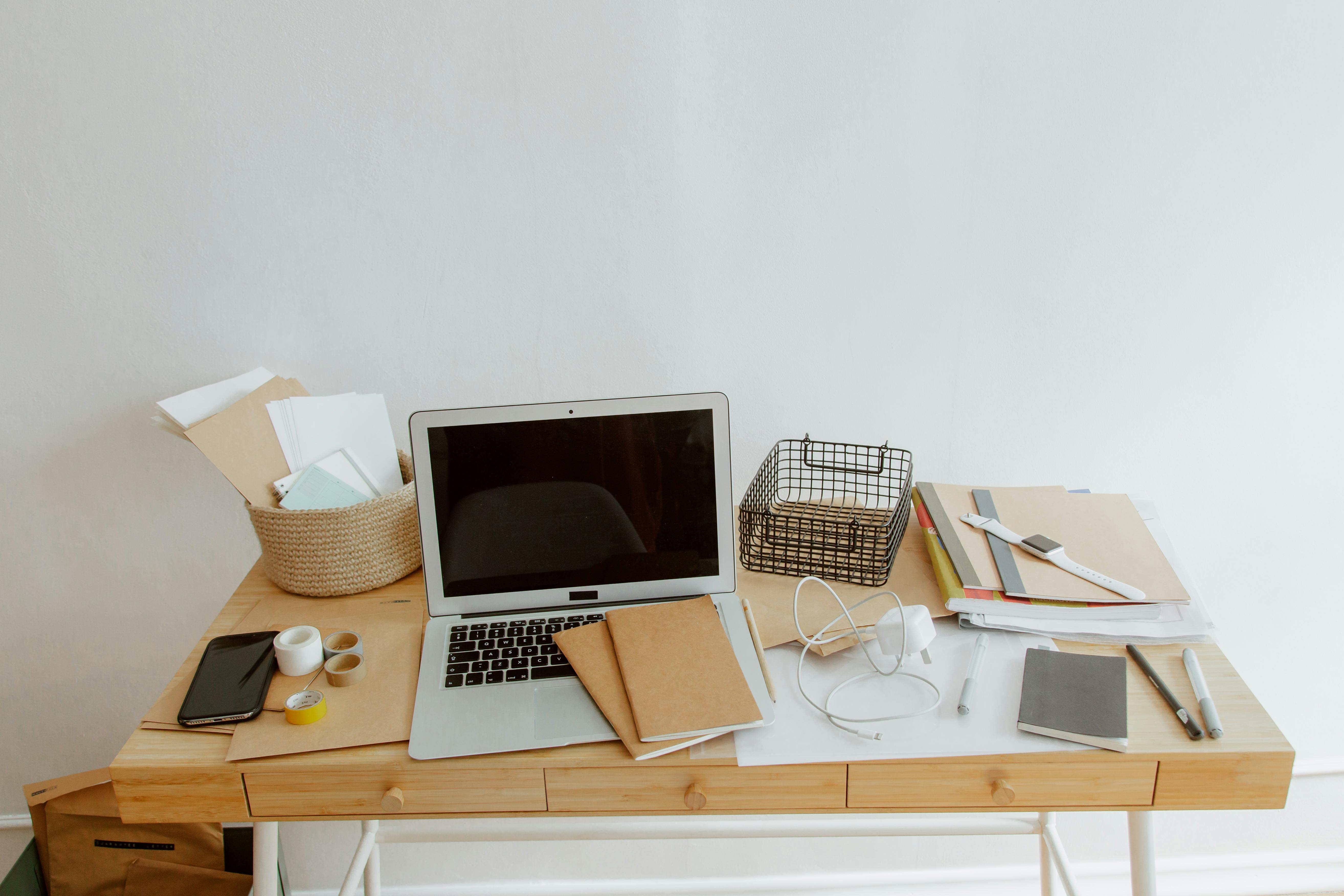
A Slow Desk is a clean desk, but not in the sterile, empty sense. It is clean because it is curated. Every item on your desk should earn its keep. If you have a stack of old papers, a tangled mess of cables, or three different mugs from 2019, you are creating visual noise. Visual noise is just another form of digital burnout.
Try the end-of-day reset ritual. Before you log off, take three minutes to clear your surface. Close your tabs, wipe down your keyboard, and place one intentional object on your desk—perhaps a small plant, a piece of art, or a smooth stone you picked up on a walk. This ritual acts as a psychological bookmark, closing the day and preparing your space for a fresh start tomorrow. It is not about perfection; it is about respecting your space enough to keep it clear.
Building Your Own Sanctuary
Transitioning to a Slow Desk does not require a total overhaul. Start with one sense. Maybe this week you replace that plastic mouse pad with a wool desk mat. Next week, you might swap your harsh desk bulb for a warm-glow alternative. The point is to stop being a passive recipient of your office environment and start being an active curator of it.
When you align your workspace with your biology, you stop fighting against your environment. You stop needing to force focus, and you start finding it naturally. The Slow Desk is not a luxury; it is a necessity for anyone who wants to produce meaningful work in an age of constant distraction. Take a deep breath, look at your desk, and ask yourself: does this space make me want to rush, or does it make me want to create? If it is the former, it is time to slow down.