Quantum Leap: New Computer Unveils Elementary Particle Secrets

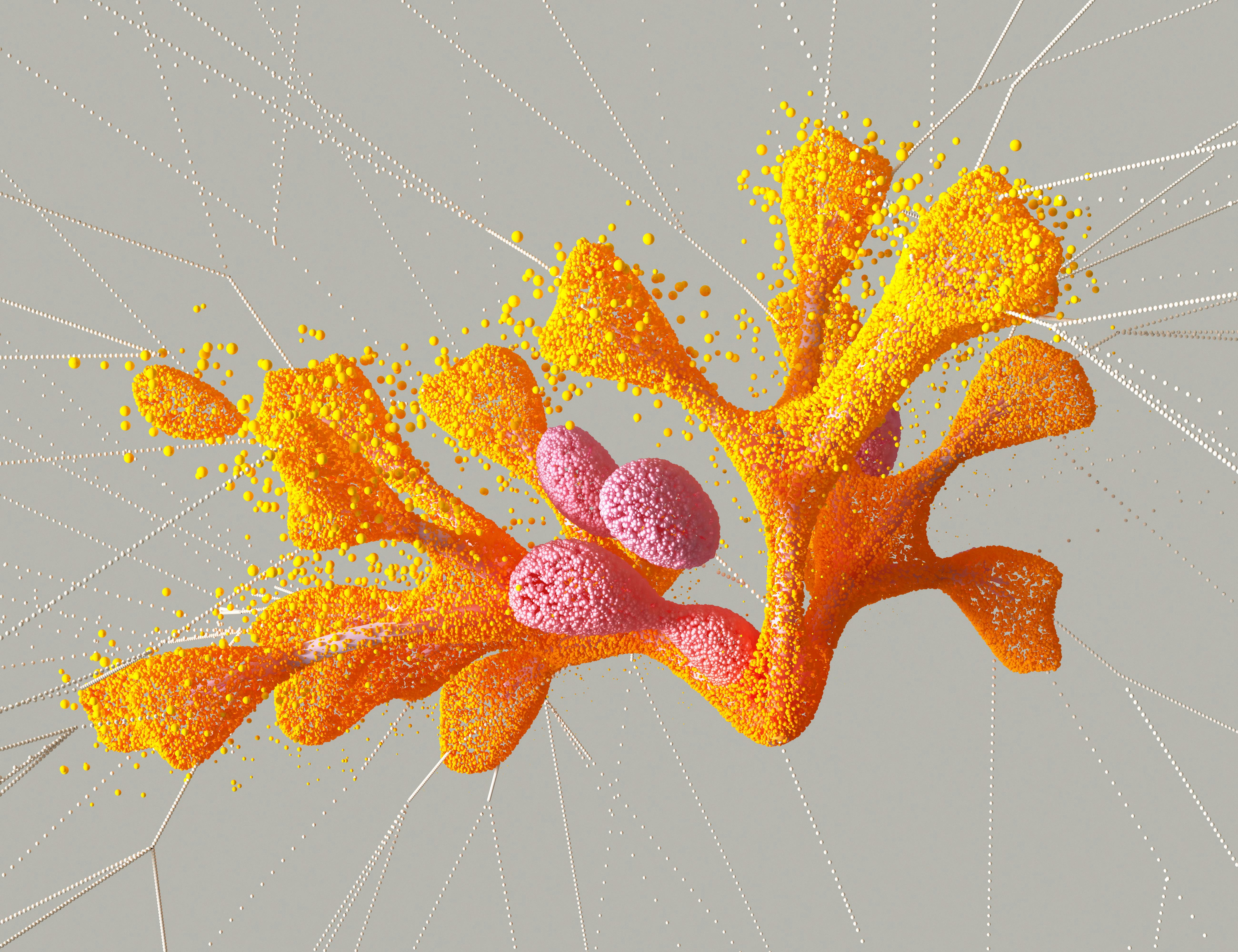
The Universe's Tiny Dancers: A Quantum Revelation
Imagine a stage, not of wood and velvet, but of pure energy. On this stage, the universe’s smallest actors – elementary particles – perform a dizzying dance, interacting through fundamental forces. For decades, physicists have strived to understand this intricate choreography, but the tools have often felt clunky, like trying to film a ballet with a giant, outdated camera. Now, a groundbreaking innovation promises a revolution: a new type of quantum computer designed to observe and simulate this subatomic ballet with unprecedented clarity.
Beyond the Silicon: Entering the Quantum Realm
Traditional computers, built on bits that represent 0 or 1, struggle to capture the inherent quantum nature of elementary particles. These particles, like electrons and quarks, don’t just have properties; they exist in a superposition, a state of multiple possibilities simultaneously. This is where quantum computers come in. Instead of bits, they use qubits. Qubits can be 0, 1, or both at once, leveraging the weirdness of quantum mechanics to solve complex problems beyond the reach of classical computers.
The team of physicists, whose work we'll be discussing, isn't just building another quantum computer; they're building a specific kind, tailored for the unique challenges of particle physics. This isn't a general-purpose machine; it’s a precision instrument.
The Challenge: Simulating the Standard Model
The Standard Model of particle physics is our current best understanding of the fundamental particles and forces. It's a remarkably successful theory, predicting experimental results with stunning accuracy. However, even the Standard Model has limitations. Simulating its complex interactions, especially at high energies, demands enormous computational power. This is because the equations describing these interactions are incredibly complicated and require dealing with the quantum entanglement of many particles simultaneously.
Think of it this way: imagine trying to predict the weather. You can use simple models for a small area, but to accurately forecast a global storm, you need a supercomputer. Particle physics faces a similar challenge. The more complex the system, the more computational power is required. This is where quantum computers offer a potential breakthrough.
The Quantum Advantage: A New Kind of Simulation
The new quantum computer is designed to address this head-on. The researchers aren't just porting existing simulations to a quantum platform; they're fundamentally rethinking how to approach the problem. They leverage the unique properties of qubits to directly represent and manipulate the quantum states of particles. This means that the computer can, in essence, “think” in the language of quantum mechanics.
Here's how it works in principle:
- Encoding Information: The properties of the particles (like their spin or charge) are encoded onto the qubits.
- Simulating Interactions: The quantum computer then performs operations that mimic the interactions between these particles, governed by the Standard Model's equations.
- Measuring the Outcome: Finally, the computer measures the state of the qubits, revealing the results of the simulation.
This approach allows physicists to model phenomena that are currently intractable for classical computers. For example, the quantum computer could simulate the behavior of quarks and gluons inside protons and neutrons, a process known as lattice quantum chromodynamics. This could lead to more precise predictions of particle properties, paving the way for new discoveries.
Case Study: The Mystery of the Proton's Spin
One fascinating application of this technology lies in understanding the proton's spin. Protons, although appearing simple, have a complex internal structure. Their spin, a fundamental property, isn't just due to the spin of the quarks inside them; the gluons (the force carriers that bind the quarks together) also contribute. This is a notoriously difficult problem to solve, but the new quantum computer offers a powerful tool to delve into this mystery.
By simulating the interactions of quarks and gluons within the proton, physicists can gain deeper insights into the origins of its spin and the dynamics of the strong force. This could potentially lead to a better understanding of the structure of matter itself.
Beyond the Horizon: What This Means for the Future
The development of this new type of quantum computer is a significant step forward. It’s not just about building faster computers; it’s about unlocking a new way of understanding the universe. This research opens several exciting avenues for future exploration:
- Unveiling New Particles: The quantum computer could help predict the properties of new particles, which could be discovered at the Large Hadron Collider (LHC) or future particle accelerators.
- Testing the Standard Model: More precise simulations could reveal discrepancies between the Standard Model and experimental results, potentially pointing towards new physics beyond the Standard Model.
- Advancing Materials Science: Quantum simulations can also be used to understand the behavior of materials at the atomic level, leading to breakthroughs in areas like superconductors and new energy technologies.
Actionable Takeaways: Embracing the Quantum Revolution
So, what does this mean for you? While you might not be building a quantum computer in your garage, here are a few ways to engage with this exciting field:
- Stay Informed: Follow reputable science news outlets and physics journals to stay up-to-date on the latest developments in quantum computing and particle physics.
- Support Scientific Research: Consider supporting organizations that fund research in these areas. Your contribution can help accelerate the discovery process.
- Explore Educational Resources: Online courses and documentaries are available to learn more about quantum mechanics and particle physics. There are many accessible resources available for beginners.
- Consider a Career: If you're interested in a STEM career, consider specializing in quantum computing, particle physics, or a related field. The demand for skilled professionals in these areas is growing rapidly.
The journey into the quantum realm is just beginning. With each new discovery, we get closer to understanding the fundamental laws that govern our universe. This new type of quantum computer is not just a technological marvel; it’s a window into the very fabric of reality. The dance of elementary particles is about to become a lot clearer, and the future of physics looks brighter than ever.
This post was published as part of my automated content series.