Decoding the AI Brain: Neural Nets & Human Thinking

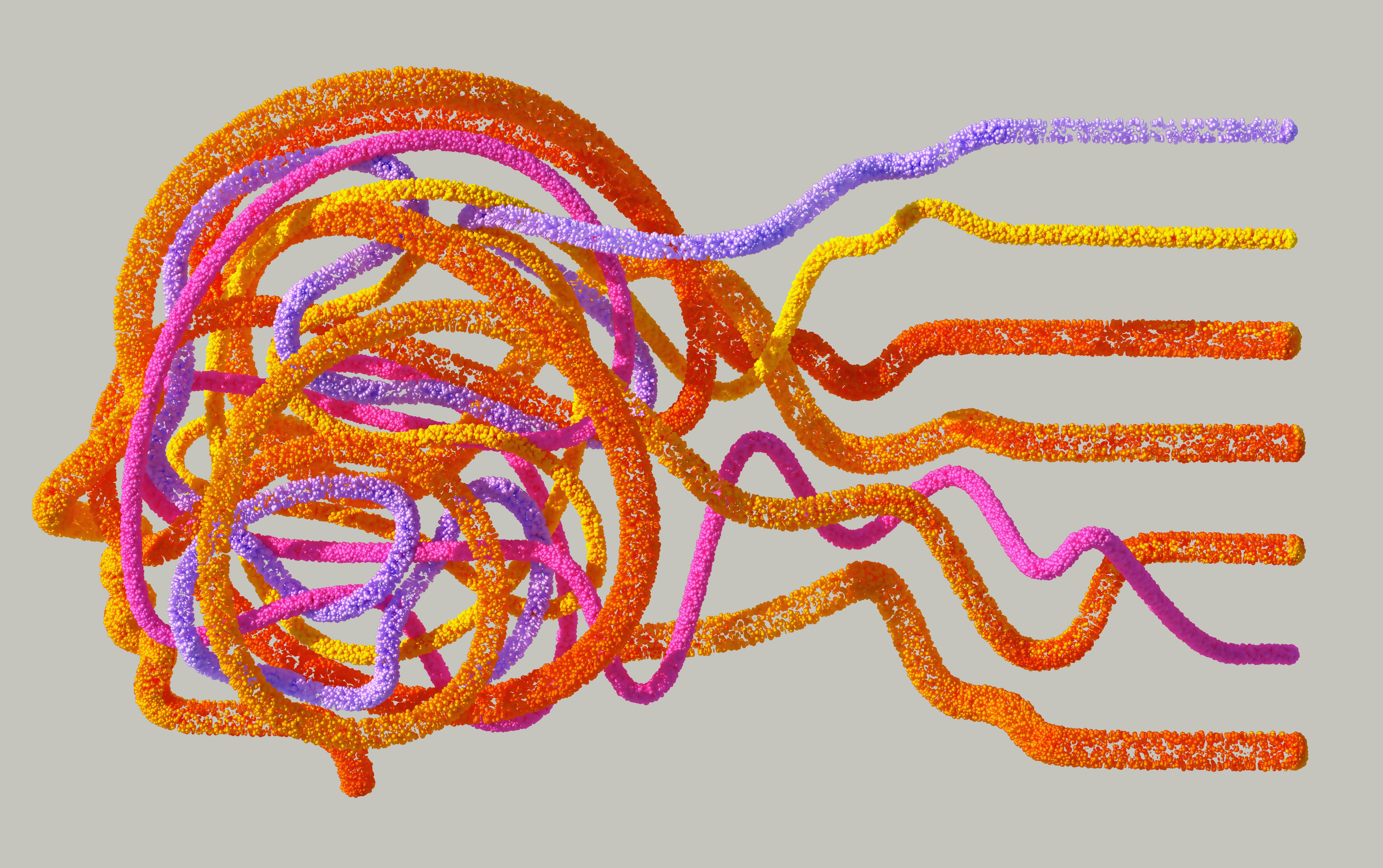
The Robot Within: Are AI's Brains Like Ours?
Ever wondered how your phone recognizes your face, or how Netflix knows what shows you'll love? The answer, at least partially, lies in the fascinating world of artificial intelligence, specifically, artificial neural networks. These complex systems, inspired by the structure of the human brain, are rapidly changing how we interact with technology and, perhaps even more intriguingly, are giving us a glimpse into the very nature of intelligence itself. But how do they actually 'think'? Are their processes truly similar to our own?
Building Blocks: Neurons and Connections
Imagine the human brain. It's a vast network of billions of neurons, interconnected and firing electrical signals. Artificial neural networks (ANNs) mimic this structure, albeit on a much smaller scale. The core of an ANN is the 'artificial neuron,' a mathematical function that receives inputs, processes them, and produces an output. These neurons are arranged in layers: an input layer, one or more hidden layers, and an output layer. The connections between neurons have 'weights' assigned to them, representing the strength of the connection. Think of it like this: a strong connection between two neurons means they heavily influence each other's activity.
Let's consider a simple example: a network designed to recognize handwritten digits (like those on a check). The input layer might receive pixel values from an image of a '7'. These values, along with their associated weights, are fed into the hidden layers. The hidden layers perform complex calculations, transforming the input data into more abstract representations. Finally, the output layer, with its own weights and activation functions, produces a prediction – in this case, the probability that the image represents a '7'.
The Secret Sauce: Backpropagation and Learning
So, how does this network learn to recognize a '7'? The process is called backpropagation, and it's a cornerstone of how ANNs train. Initially, the network makes guesses, often wildly inaccurate. Backpropagation is the mechanism that allows the network to learn from its mistakes. Here’s how it works:
- Forward Pass: The input data (the image of the '7') is fed through the network, producing an output (e.g., a 60% probability of being a '7').
- Error Calculation: The network compares its output to the correct answer (the actual label, which is '7'). It calculates the 'error' or difference between its prediction and the truth.
- Backward Pass (Backpropagation): The error is then 'propagated' backward through the network, layer by layer. The weights of the connections are adjusted based on their contribution to the error. Weights associated with connections that contributed to the incorrect prediction are weakened; those that contributed to the correct prediction are strengthened.
- Iteration: This process is repeated over and over, with the network processing thousands, even millions, of examples. With each iteration, the network refines its weights, gradually improving its accuracy.
Think of it like learning to ride a bike. At first, you wobble and fall (high error). With each attempt (iteration), you adjust your balance (weights), learning to stay upright for longer periods. Eventually, you can ride smoothly (low error).
Activation Functions: The Key to Complexity
Within each artificial neuron, an 'activation function' plays a crucial role. These functions introduce non-linearity into the network, allowing it to model complex relationships in the data. Without activation functions, the network would simply perform linear transformations, severely limiting its ability to learn. Popular activation functions include:
- Sigmoid: Outputs a value between 0 and 1, often used for probability estimates.
- ReLU (Rectified Linear Unit): Outputs the input if it's positive, and 0 otherwise. This is a computationally efficient and widely used function.
- Tanh (Hyperbolic Tangent): Outputs a value between -1 and 1.
The choice of activation function can significantly impact a network's performance. For instance, a network designed to classify images might use ReLU in its hidden layers to allow it to learn complex features, while a sigmoid function in the output layer might produce a probability of the image belonging to a specific category.
AI & Human Cognition: Similarities and Differences
The similarities between ANNs and the human brain are striking. Both systems are composed of interconnected networks of processing units (neurons). Both learn through experience (backpropagation vs. synaptic plasticity). Both can perform complex tasks like image recognition, natural language processing, and even creative endeavors. However, there are crucial differences.
Human brains are incredibly efficient, consuming far less energy than even the most sophisticated ANNs. Human learning is often more intuitive and requires far fewer examples than ANNs. Moreover, we possess a level of general intelligence and adaptability that ANNs have yet to achieve. ANNs excel at specific, well-defined tasks but often struggle with tasks outside of their training domain. We, on the other hand, can apply learned concepts to new situations more readily. For example, a network trained to identify cats might not recognize a dog, whereas a human, after seeing a few examples of dogs, can generally understand the concept.
Consider the game of Go. AlphaGo, an AI developed by Google, famously defeated the world champion. This demonstrates remarkable intelligence. However, AlphaGo's understanding of Go is fundamentally different from a human's. It doesn't understand the strategic nuances, the history, the cultural significance of the game. It simply has learned to predict the optimal moves based on vast amounts of data. This highlights the distinction between narrow AI (specialized) and general AI (human-like intelligence).
Ethical Implications and the Future
The rapid development of AI, particularly in the realm of neural networks, raises important ethical questions. As AI systems become more powerful and autonomous, we must consider issues such as bias in algorithms, job displacement, and the potential for misuse. Ensuring transparency, fairness, and accountability in AI development is crucial. We need to understand how these “brains” work to ensure that they align with our values and goals.
The future of AI is incredibly exciting. We are seeing breakthroughs in areas like generative AI (creating images, text, and music), natural language understanding, and robotics. As we continue to refine our understanding of neural networks and their capabilities, we are also gaining a deeper appreciation for the complexities of the human brain. It's a journey of discovery that will likely shape the future of humanity.
Actionable Takeaways: Understanding the AI Revolution
So, what can you take away from all this? Here are a few key points:
- Embrace the Learning Curve: AI is here to stay. Understanding the basics of neural networks, even at a high level, will help you navigate the changes to come.
- Be Critical: Recognize that AI systems are not infallible. Understand their limitations and potential biases.
- Stay Informed: Follow developments in AI research and consider how these advancements might impact your industry and life.
- Promote Ethical AI: Support initiatives that prioritize fairness, transparency, and responsible AI development.
The 'AI brain' is still a work in progress, but it's already transforming our world. By understanding how these networks 'think,' we can better prepare ourselves for the future and help shape it for the better.
This post was published as part of my automated content series.