Mirror Universes: Could Dark Matter Be Hiding in a Parallel World?

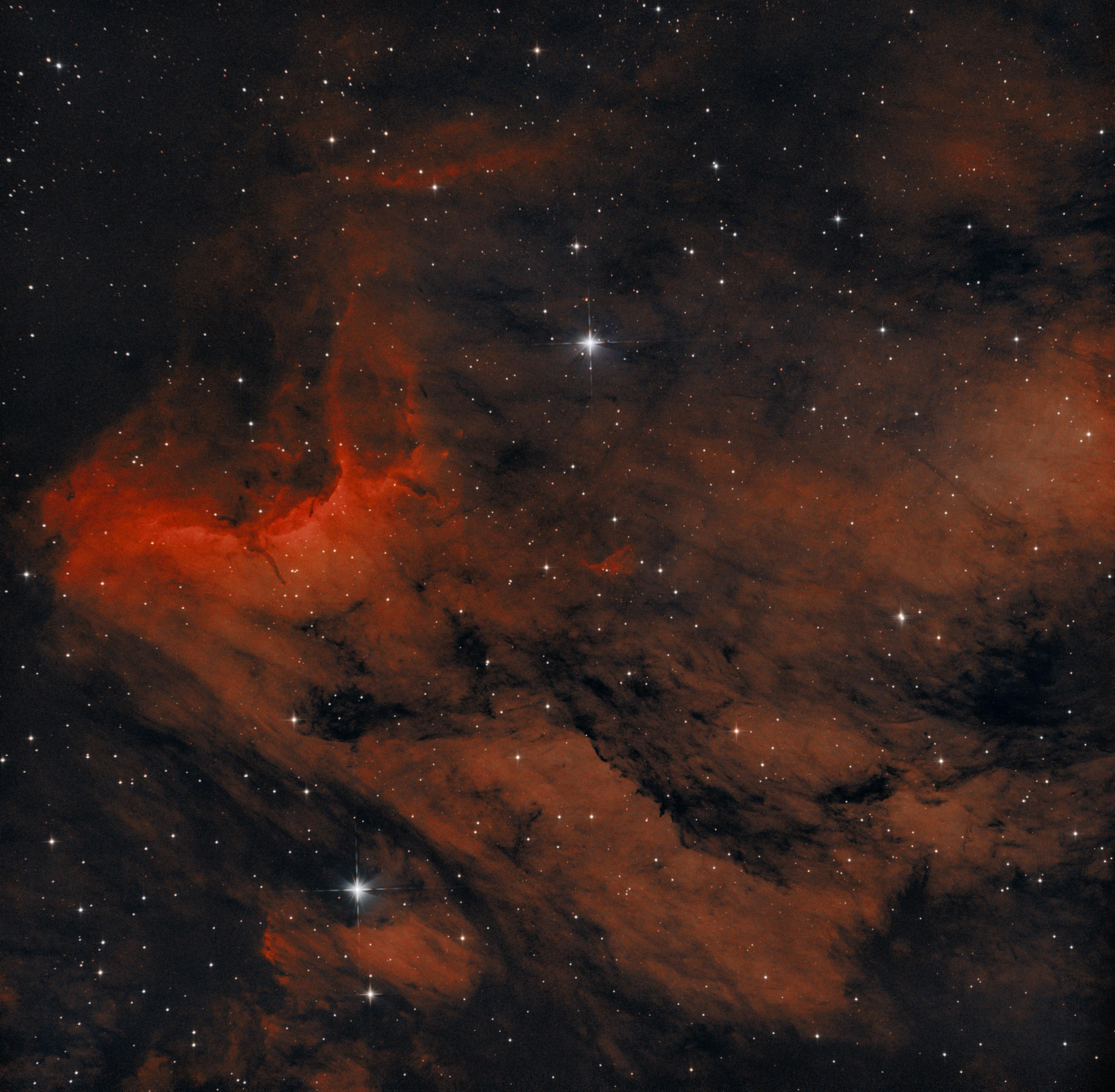
Beyond Our Universe: A Peek into the Unknown
Imagine a world remarkably similar to our own, yet utterly invisible. A place where the laws of physics, the particles that make up everything, even the very fabric of space-time, mirror our own. This isn't science fiction; it's a seriously considered possibility in the realm of physics, and it might just hold the key to one of the universe's greatest enigmas: dark matter. For years, scientists have been baffled by this invisible substance, which makes up roughly 85% of all the matter in the cosmos. We can't see it, we can't touch it, but we know it's there because of its gravitational effects on galaxies and the way light bends around them. Now, a fascinating theory proposes that dark matter might originate from a “mirror” universe, a parallel reality just out of our reach. Let's dive deep into this mind-bending concept.
The Mystery of Dark Matter: A Quick Refresher
Before we jump into mirror universes, let's recap what we know (and don’t know) about dark matter. We observe galaxies spinning far faster than they should, based on the visible matter they contain. This suggests the presence of unseen mass, the gravitational glue holding everything together. This unseen mass is dark matter. Think of it like this: imagine a merry-go-round. You see the children (visible matter) but it’s spinning far too fast for them to stay on without some unseen force holding them in place. That unseen force is dark matter. We've tried to detect dark matter directly, using sophisticated detectors, but so far, we've come up empty-handed. This has led physicists to explore increasingly creative and intriguing possibilities.
Enter the Mirror Universe: A Parallel Existence
The concept of a mirror universe, as proposed by UC Santa Cruz physicist Stefano Profumo, offers a compelling solution. In this model, our universe isn't unique. There's a parallel universe, existing alongside our own, with its own particles, forces, and even its own version of the Big Bang. The key difference? These mirror particles interact very, very weakly with the particles in our universe. So weakly, in fact, that they’re essentially invisible to us. Profumo's theory suggests that the early mirror universe could have created dense black hole-like objects, which now make up the dark matter we observe.
Here’s a breakdown of how this works:
- Symmetry is Key: The idea stems from the concept of symmetry in physics. Some physicists believe that nature favors symmetry, so if there's a particle in our universe, there should be a corresponding "mirror" particle in the parallel universe.
- Early Universe Dynamics: In the early universe, both universes were incredibly hot and dense. Profumo's model proposes that as the mirror universe cooled, conditions were right for the formation of primordial black holes.
- Black Hole Seeds: These primordial black holes, formed in the mirror universe, would have the right mass and properties to behave like the dark matter we observe. They wouldn't interact with regular matter, only through gravity, which is exactly what we see dark matter doing.
- Gravitational Influence: These black holes, existing in the mirror universe, would still exert a gravitational pull on our universe, explaining the observed effects of dark matter on galaxies.
Analogies and Examples: Making the Invisible Visible
Let's try a few analogies to make this easier to grasp. Imagine two fishbowls, side-by-side. In our fishbowl (our universe), there are colorful fish (visible matter). In the other fishbowl (the mirror universe), there are different, invisible fish. They might be the same size and shape as our fish, but they're made of a different material, one that doesn't interact with the light we can see. We can't see the fish in the other bowl directly, but we can see how the movement of the water affects the fish in our bowl. That movement represents the gravitational influence of the mirror-universe fish (dark matter).
Another example: think of a concert hall with two rooms separated by a one-way mirror. In one room, the orchestra plays. In the other room, a ghost orchestra plays the exact same notes. The ghost orchestra is made of dark matter. We can only “hear” the ghost orchestra indirectly, through its impact on the music we do hear, but the ghost orchestra is there, contributing to the overall sound.
Beyond Mirror Universes: Quantum Radiation at the Edge
Profumo's work doesn't stop at mirror universes. He also explores another fascinating possibility: that dark matter was generated by quantum radiation at the edge of the universe during rapid expansion shortly after the Big Bang. This theory is based on a concept called “Hawking radiation,” which suggests that black holes emit radiation due to quantum effects near their event horizons. Profumo’s model suggests that a similar process could have occurred at the edge of our universe, creating dark matter particles.
This alternative theory, while complex, provides another way to explain the origin of dark matter without relying on the existence of a mirror universe. It highlights the ingenuity and creativity of modern cosmology, as scientists constantly seek to understand the universe’s deepest mysteries.
The Road Ahead: What Does This Mean for Us?
So, what are the practical implications of these theories? Well, for now, they're largely theoretical. But that doesn't mean they're unimportant. These ideas provide a framework for future research and experimentation. If dark matter is indeed composed of primordial black holes from a mirror universe, it could influence how we design future dark matter detectors. If dark matter arises from quantum effects at the universe's edge, it could shed light on the very earliest moments of the Big Bang.
Here's what you can take away from this:
- The Universe is Full of Surprises: The more we learn, the more we realize how little we know. The nature of dark matter is a testament to the universe's complexity and the vastness of the unknown.
- Theoretical Physics Drives Discovery: Seemingly abstract theories, like those of Profumo, are crucial. They provide the hypotheses that scientists can test, pushing the boundaries of human understanding.
- We’re on the Verge of Something Big: As our technology improves, we're getting closer to the possibility of detecting dark matter directly or finding evidence that supports these exciting theories. The next few decades could bring groundbreaking discoveries.
Conclusion: Looking Beyond the Horizon
The idea that dark matter might be hiding in a mirror universe is a truly captivating one. It's a testament to the power of scientific imagination and the relentless pursuit of knowledge. While we may not have a definitive answer about dark matter today, the theories of Profumo and other cosmologists offer tantalizing clues. As we continue to explore the cosmos, using increasingly sophisticated tools and more creative thinking, we inch closer to unraveling the mysteries that have baffled scientists for generations. The search for dark matter is a journey, not just a destination, and the potential discoveries along the way promise to reshape our understanding of everything.
This post was published as part of my automated content series.