Scientists Beam Laser Through Human Head: A Brain Imaging Breakthrough?

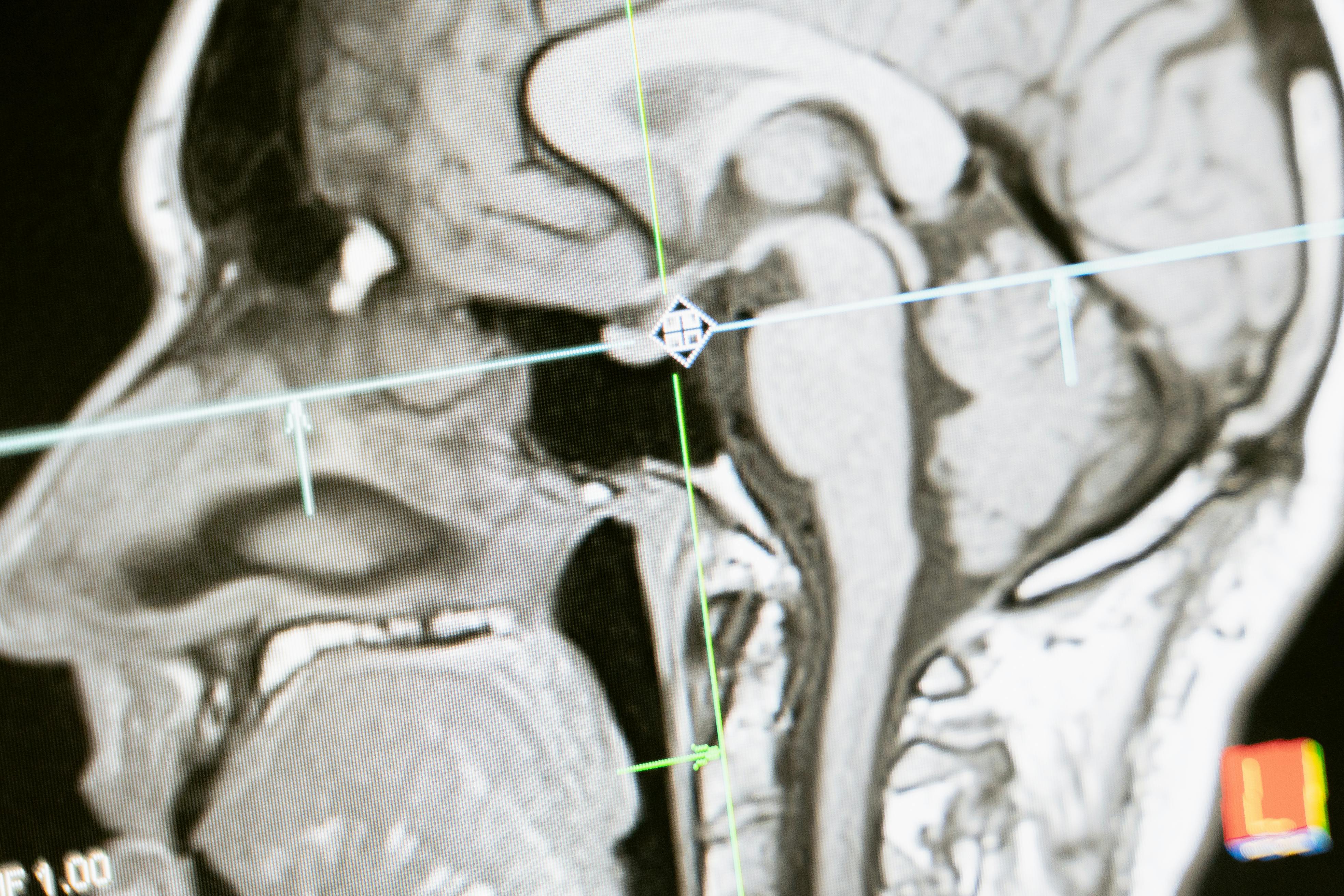
Shining Light on the Impossible: A Glimpse Inside Your Brain
Imagine a world where doctors could peek inside your brain as easily as they check your blood pressure. No more bulky, expensive MRI machines, no more limited views. Sounds like science fiction, right? Well, a team of brilliant scientists at the University of Glasgow is inching us closer to that reality. They’ve achieved something previously considered impossible: shining a laser all the way through a human head. Yes, you read that right. It's a feat that could revolutionize how we diagnose and treat a myriad of neurological conditions.
The Brain's Protective Fortress
The human skull is a formidable barrier. It's designed to protect the delicate machinery of our brains, and it does a pretty good job of it. That's why getting a clear picture of what's happening inside has always been a challenge. Existing brain imaging techniques come with significant trade-offs. Electroencephalograms (EEGs) are portable and relatively inexpensive, but they only scratch the surface, providing limited information about the brain's outer layers. Functional magnetic resonance imaging (fMRIs) offer much deeper insights, but they're expensive, require specialized facilities, and are far from accessible to everyone.
Optical brain imaging, which uses light, particularly near-infrared light, to peer into the brain, seemed like a promising alternative. Near-infrared light is relatively transparent to human tissue. However, the skull is exceptionally good at blocking even these wavelengths. Scientists had long believed that getting enough light through the entire head to create useful images was simply impossible. Only a tiny fraction of the light makes it through, about one in a billion billion photons, to be precise.
Against All Odds: The Glasgow Experiment
Daniele Faccio's group at the University of Glasgow refused to accept this limitation. Led by Jack Radford, they embarked on a quest to prove the impossible, and their perseverance paid off. The team meticulously designed an experiment to test the limits of near-infrared light transmission through a human head. They started with a thick, light-scattering material to simulate the human head's density and then moved on to testing with volunteers.
The core of the experiment involved firing a 1.2-watt laser emitting 800-nanometer-wavelength light through one side of a volunteer's head and measuring the time it took for the light to reach a detector on the other side. This measurement allowed the team to analyze the different paths the photons took through the head. They also ran computer simulations to map the photons' routes and compared the results. If the experimental and simulated results matched, it would be a strong indication that the photons were, in fact, passing through the head and not simply being detected by chance.
But it wasn't easy. As Radford himself admits, there were “five years of experiments that didn’t really work.” The team battled background noise, which was a major hurdle. Because so few photons make it through the head, the signal was easily drowned out by light scattering around the room. They tried various methods to block out that interference; draping the subject's head in black cloth, conducting the experiment in a black box, and even using a sleeping bag-type arrangement, all to improve the signal. They also experimented with different lasers, adjusting the beam size and wavelength, and invented new setups to improve their signal, some of which involved bicycle helmets and chin straps.
“Sometimes we went through phases of thinking, okay, maybe this is just impossible because we just didn’t see a signal for so many years,” Radford said. “But there was always some sort of inclination that we might be able to do something. So that’s kind of what kept the momentum going in the research project.”
The Promise of Deeper Insights
The implications of this breakthrough are huge. If scientists can reliably shine light through the entire human head, it opens the door to cheaper, more portable, and deeper-penetrating brain-imaging technology. This could revolutionize how we diagnose and treat a range of neurological conditions.
“Applications to date pretty much are just focused on the surface of the brain—that’s what current technology can do,” says Roarke Horstmeyer, a professor in Duke University’s biomedical engineering department, who was not involved in the Glasgow research. The research “helps to assess and establish whether or not this optical technology can begin to reach those deeper regions.”
Potential Applications: From Concussions to Strokes
One exciting application is in the diagnosis and management of conditions like cognitive decline, neurodegenerative diseases, brain fog, and concussions. Currently, doctors often rely on questionnaires to assess these conditions, which can be subjective and lack precision. Optical imaging could provide objective biomarkers, offering a more accurate and reliable way to track brain health over time.
Another potential application is the rapid diagnosis of strokes. Time is of the essence when treating a stroke. Current methods, such as CT scans and MRIs, can take hours to obtain, delaying crucial treatment. A portable, bedside optical brain scanner could quickly identify the cause of a stroke, allowing for immediate and targeted interventions. This could potentially save lives and minimize long-term neurological damage.
Challenges Ahead
While the Glasgow team's achievement is remarkable, it's important to acknowledge that the technology is still in its early stages. The study focused on demonstrating the feasibility of light transmission, not on creating detailed brain images. Several hurdles remain before this technology can be widely adopted in clinical settings.
One major challenge is the variability in human anatomy. The color of the skin, the thickness of the skull, and even the amount of hair can affect the passage of light. In the Glasgow study, they were only able to detect a signal from one participant with fair skin and no hair. Researchers will need to find ways to overcome these anatomical differences. Perhaps by adjusting the power and beam size of the laser, although this could affect the spatial resolution of the images.
Looking Ahead: The Future of Brain Imaging
Despite the challenges, the Glasgow team's work represents a significant step forward. They've shown that what was once considered impossible is now within reach. This breakthrough could inspire the next generation of brain-imaging devices, opening up exciting possibilities for healthcare and research.
The ability to see deeper into the brain, with more accessible technology, could dramatically change how we understand and treat neurological disorders. The journey from a lab experiment to a clinical tool is a long one, but the Glasgow scientists have illuminated a path towards a future where we can truly see what's happening inside our minds.
Key Takeaways
- Scientists have successfully transmitted light through a human head, previously thought impossible.
- This breakthrough could lead to cheaper, more portable, and deeper-penetrating brain imaging.
- Potential applications include improved diagnosis of cognitive decline, strokes, and concussions.
- Challenges remain, including overcoming anatomical variations and improving image resolution.
- This research represents a significant step toward a future with more accessible and advanced brain imaging technologies.
This post was published as part of my automated content series.