Video Friday: Inaugural World Humanoid Robot Games Held

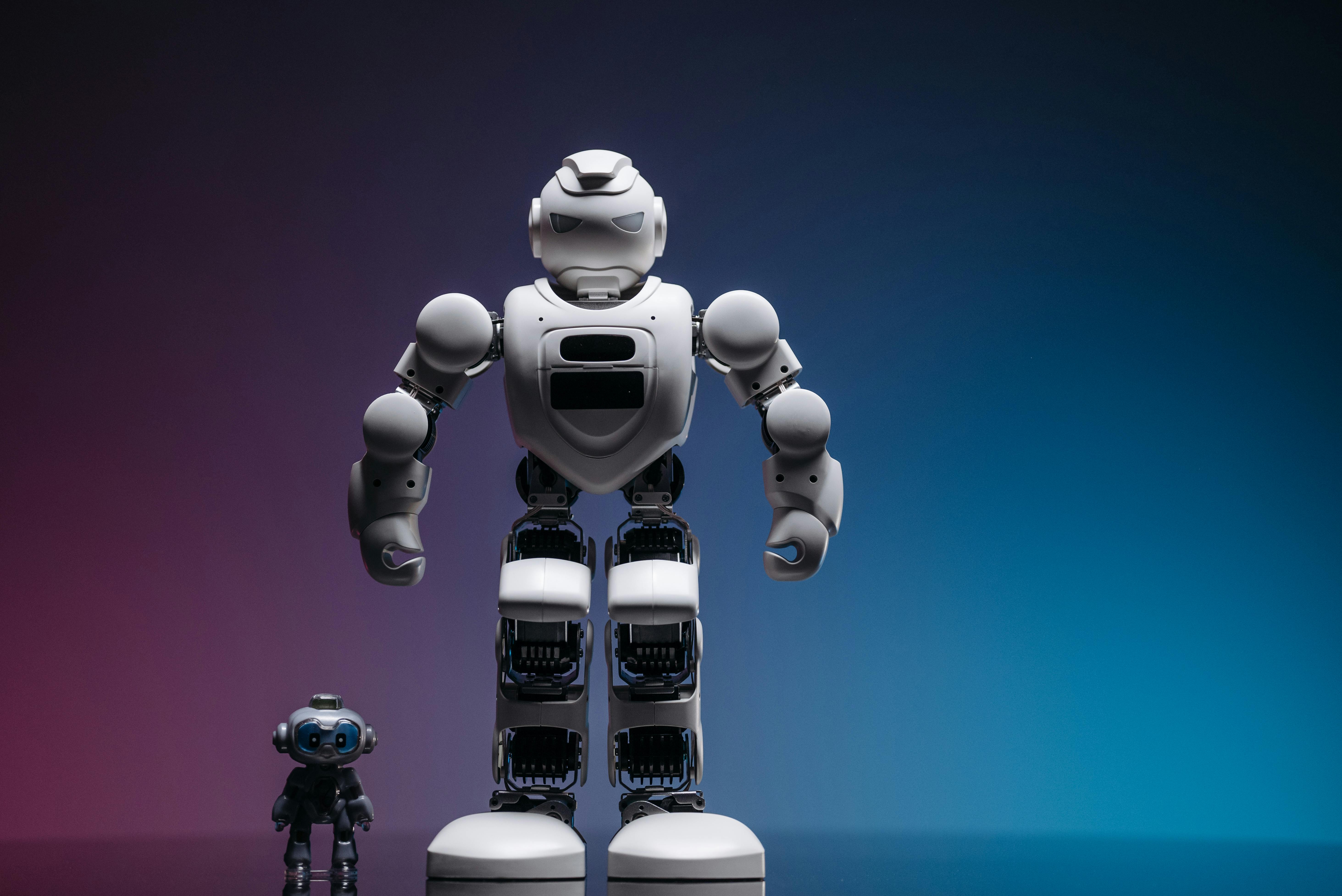
Get Ready to Witness the Future: The World Humanoid Robot Games!
Ever imagined a world where robots are not just building cars or exploring Mars, but are actually competing in athletic events? Well, folks, that future is here! This week, we dive headfirst into the electrifying world of the inaugural World Humanoid Robot Games. Forget the Olympics; this is the Robo-lympics! From sprinting to obstacle courses, these mechanical marvels are pushing the boundaries of what's possible. In this week's Video Friday, we're breaking down the highlights, the tech, and the sheer awesomeness of this groundbreaking event. Get ready to be amazed!
The Unitree Reign: Dominating the Track
Let's start with a bang! Unitree, a name that’s quickly becoming synonymous with humanoid robotics, absolutely crushed the competition. Their robots weren't just participating; they were dominating. Check out the video of their performance, which includes a stunning victory in the 1500m, 400m, 100m obstacle course and the 4x100m relay. These aren't just impressive feats of engineering; they’re a testament to the incredible strides being made in robotics.
How They Did It:
- Advanced Actuators: Unitree robots likely use highly sophisticated actuators, the “muscles” of the robot, allowing for quick and precise movements.
- Sophisticated Control Algorithms: These algorithms manage balance, gait, and coordination, essential for running and navigating obstacles.
- Durable Design: The robots need to withstand falls and impacts while maintaining peak performance.
The Unitree robots' success highlights the ongoing race to build faster, more agile, and more resilient humanoid robots. It's not just about speed; it's about control, balance, and the ability to adapt to the unexpected.
PNDbotics Adam: Conquering the Obstacle Course
The 100m obstacle race is a true test of a robot's agility and problem-solving skills. PNDbotics Adam, a full-size humanoid robot, managed to complete the course.
Why This Matters:
- Complex Navigation: Obstacle courses require robots to perceive their environment and make real-time decisions.
- Balance and Stability: Maintaining balance while navigating uneven terrain is a significant challenge.
- Robust Design: The robot must be able to withstand potential falls and continue performing.
The successful completion of the obstacle course by PNDbotics Adam is a huge step forward, showing that these robots are evolving from being just novelties to actually being capable of tackling complex, real-world tasks.
Beyond the Track: Innovative Robotics in Action
The World Humanoid Robot Games are just the tip of the iceberg. This week's Video Friday also showcases a range of other exciting robotic developments. Let's take a look:
FieldAI's Foundation Models: Robots That Learn from Physics
FieldAI is introducing a new class of models called “physics-first” foundation models (FFMs). These models are specifically designed to grapple with uncertainty, risk, and the physical constraints of the real world.
Key Takeaway:
FFMs enable safe and reliable robot behaviors in dynamic, unstructured environments without prior maps or predefined paths. This is a game-changer for applications like autonomous navigation in complex environments.
Multiply Labs: Revolutionizing Drug Manufacturing with Robots
Multiply Labs is using collaborative robots from Universal Robots to transform the manufacturing of cell and gene therapies. Their robotic cluster significantly reduces costs (by 74%!) and increases patient dose production.
The Impact:
- Increased Efficiency: Robots can work around the clock with precision, leading to increased production.
- Cost Reduction: Automation lowers labor costs and minimizes errors, leading to significant savings.
- Improved Patient Access: Increased production allows for more doses of life-saving therapies to reach patients.
Ambidextrous Robotic Hands: The Future of Dexterity
Meet Vulcan V3, the world’s first ambidextrous humanoid robotic hand capable of performing the full American Sign Language (ASL) alphabet.
Why It's Impressive:
- Complex Movement: The hand must be able to make a wide range of gestures with precision.
- Ambidextrous Design: The ability to use both hands is essential for many tasks.
- Communication: This technology has the potential to improve communication for those with disabilities.
More Robots and Robotic Innovations
Here are some more exciting robots and innovations from this week's selection:
- Modular Robots: Dartmouth researchers are creating modular robots that can assemble into structures to suit the task at hand.
- Quadruped Robots: DEEP Robotics' X30 is completing missions in extreme environments, demonstrating its ruggedness and adaptability.
- Everyday Object Movers: A base-shaped robot, "koboshi," is designed to move everyday objects.
- Vision-Language-Action (VLA) Models: Bi-LAT integrates bilateral control into imitation learning, enabling robots to adjust force levels based on natural language instructions.
- Bipedal Robots: Mercury, a bipedal robot with passive feet, is being developed at the University of Texas at Austin.
- Delivery Robots: Rivr delivery robots are working with autonomous vehicles to handle the full last mile of delivery.
- Industrial Robots: The KR TITAN ultra is a high-performance industrial robot for heavy-duty tasks.
- Robotic Assistants: CMU MechE's LocoMan is a robotic assistant being developed for various applications.
- Human-Robot Interaction: A video featuring a robotics activist, Henry Evans, showcases the power of adaptive robotic tech.
How You Can Stay Ahead of the Curve
The robotics landscape is constantly evolving. Here's how you can stay informed:
- Follow Robotics News: Keep an eye on publications like IEEE Spectrum and other tech news sources.
- Attend Robotics Events: Check out the upcoming robotics events listed at the beginning of this post.
- Explore Online Resources: Watch videos, read research papers, and follow robotics experts on social media.
- Consider a Career in Robotics: The field is booming, and there are many opportunities for skilled professionals.
Conclusion: The Future is Now
The inaugural World Humanoid Robot Games are a fantastic showcase of the rapid advancements in robotics. From running to obstacle courses, these robots are demonstrating impressive abilities and pushing the boundaries of what's possible. Beyond the games, innovations in areas like manufacturing, medicine, and everyday life are already transforming how we live and work. By staying informed and engaged, you can be a part of this exciting future.
So, what are your thoughts on the World Humanoid Robot Games? Let us know in the comments below! And don't forget to tune in next week for another exciting edition of Video Friday!
This post was published as part of my automated content series.